The Aye-Aye
- TheWildlifeDiaries
- Jun 29, 2019
- 2 min read
What is that tap-tap-tapping on the trees in Madagascar?

Well you may have just met an aye-aye, say hi!
NEED TO KNOW
Common Name: Aye-Aye
Type: Mammal
Size: Head and body: About 35cm; Tail: About 55cm
Weight: Around 2kg
Lifespan: 20-23 years
Scientific Name: Daubentonia Madagascariensis
HABITAT

The aye-aye lives primarily on the east coast of Madagascar. Its natural habitat is rainforest or deciduous forest, but many live in cultivated areas like plantations due to deforestation and an abundance of food of course!
Their favourite place to be is up in the trees where they spend the majority of their lives but they are known to find shelter in a variety of places such as mangrove swamps and even savanna on some occasions.They are nocturnal, and spend the day curled up in a ball-like nest of leaves and branches.
APPEARANCE
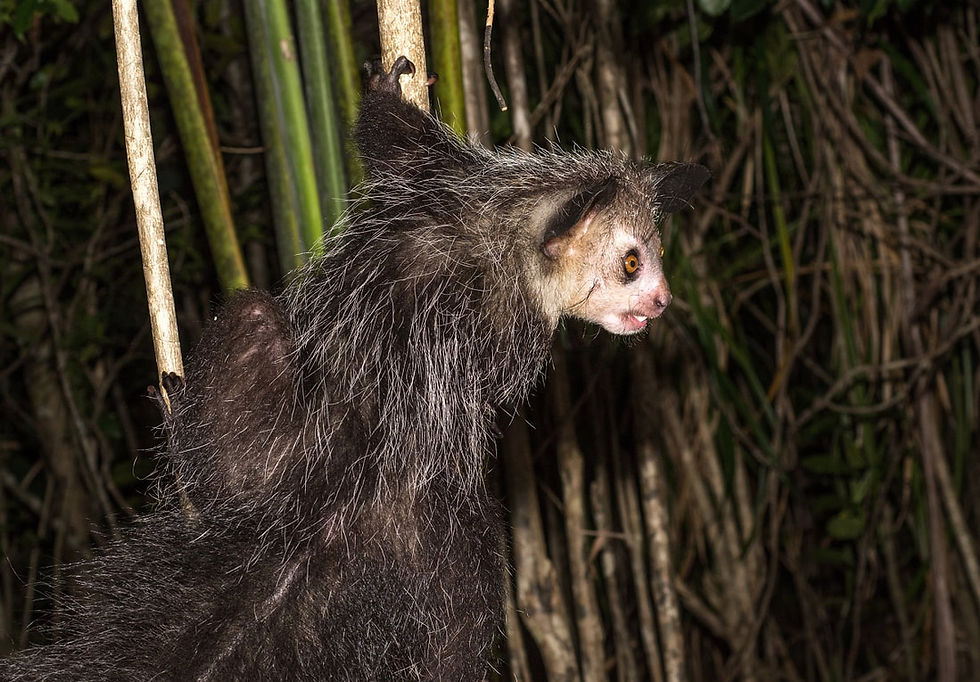
Aye-ayes are dark brown or black in colour and are distinguished by a bushy tail that is larger than their body. They also sport big eyes, slender fingers, and large ears. Aye-ayes have pointed claws on all their fingers and toes except for their opposable big toes, which allow them to dangle from branches. In a nutshell, they are pretty much adorable.

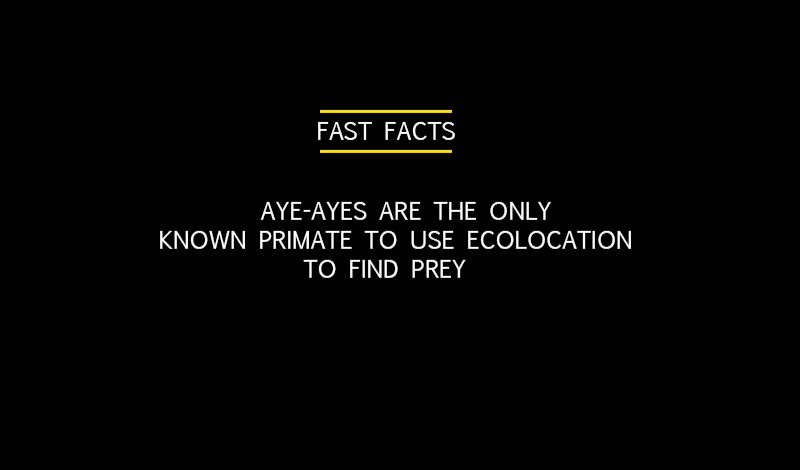
Their most distinguishing feature are their long middle fingers that are used to find food. While sitting high up in the canopy the aye-aye will tap on trees with this finger, listening for yummy insect larvae moving around under the bark. It then fishes them out using the same middle finger. It is also useful for scooping the flesh out of coconuts and other fruits and giving rude gestures to other aye-ayes (just kidding...maybe).
STATUS

Due to their appearance many people native to Madagascar consider the aye-aye an omen of bad luck. Many superstitions say that the aye-aye can predict death by pointing its finger at its chosen victim. For this reason they are often killed on sight. Such hunting, coupled with habitat destruction and the belief that the aye-aye is a crop pest has lead to the species becoming endangered with its population still declining. Today they are thankfully protected by law.





Comments