10 Incredible Sharks for You to Sink Your Teeth Into (and it's not even shark week!!!)
- TheWildlifeDiaries
- Jun 29, 2019
- 5 min read
What comes to mind when you hear the word shark?
Perhaps the mere mention of it leaves you with an image of a large, pectoral fin approaching you at rapid speed, the ominous Jaws sound track playing in the background and above all A LOT of teeth. Maybe you see sharks as highly intelligent, trained killing machines like in the movie Deep Blue Sea or have reservations about your next beach holiday being interrupted by a 18 meter long megaladon.
Of the 500 known species of sharks 143 species are currently considered endangered and many of the issues they face are due to the misconception we have about them. Here are 10 crazy sharks for you to sink your teeth into and maybe change your perception about these gentle fish.
1.) The Cookie- cutter Shark


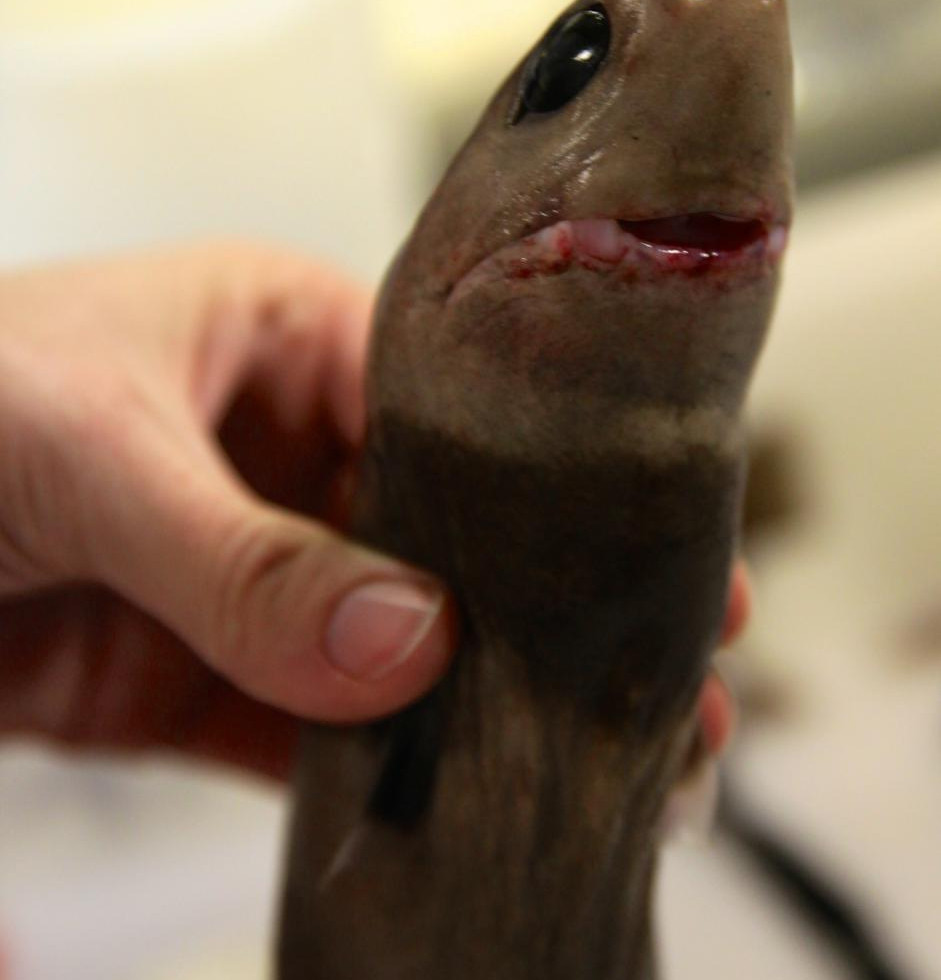

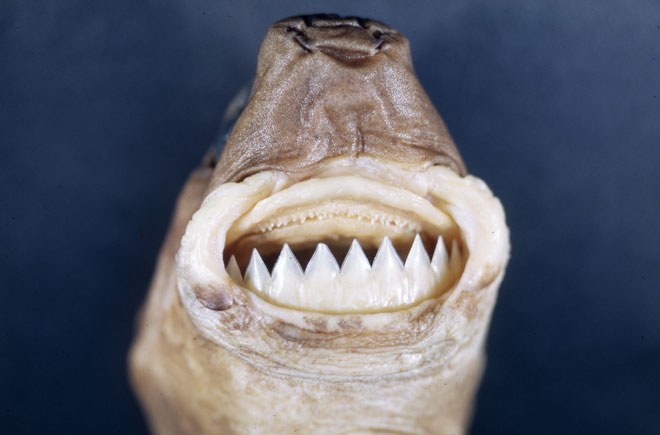
Cookie-cutter sharks are a strange species found all over the world. They get this name from their odd method of attaching themselves to pray before swivelling around their sharp teeth in a circle to remove large chunks of flesh from live dolphins,whales and even parts of submarines! These sharks have around 65 teeth, not much more than what we have and have the largest teeth in relation to their body size compared to any other shark species! Oh, and did i mention they glow in the dark too? Cookie-cutter sharks are definitely one of the most smiley (and possibly most terrifying...) sharks around. 2.) Wobbegongs

Wobbegongs belong to the carpet shark family. With their long, flat bodies (that can reach up to 4m!) that help them blend into the ocean floor, it is not hard for these sharks to suck up and spear unsuspecting pray on their large teeth. The word wobbegong is believed to mean "shaggy beard", a name that suites the frilly, branch-like barbels around their head, giving them real hipster appeal! Wobblegongs are even known on occasion to move out of the water using their strong front fins. 3.) Goblin Sharks

These bizarre sharks could easily come straight out of a Lord of the Rings movie set. With its soft, pink colour due to a large number of blood vessels underneath its near see-through skin and a long, flattened protrusion of a nose, these sharks can be described as nothing less than supernatural (and slightly grumpy looking). A goblin sharks liver takes up about 25% of its body and they have the strange ability to thrust their jaws outwards when catching squid, fish and crabs.
4.) Frilled Shark

This strange shark is named for its big, frilly gill slits (it has 6 unlike most other sharks that have 5) that extend around its whole neck like a collar. Frilled sharks have 300 sets of unusual teeth that have three sharp points per tooth. They were thought to be extinct and were only rediscovered in the late 19th century, having only been captured in their natural habitat (around 1,28016km below the surface) in 2004!
5.) Basking Shark

Basking sharks are the second-biggest shark, after the whale shark, growing up to 12m in length! But being so big doesn't stop these sharks, with the rare basking shark jumping right out of the water and landing with a huge splash! As intimidating as they look basking sharks are actually of no threat to humans. With no teeth to bite with these sharks get to work collection enough microscopic plankton to possibly satisfy its massive size (and hefty appetite) by filtering over 1.5 million litres of water (enough water to fill an olympic size pool) every hour.
6) Zebra Shark

With a tail fin as long as its body and its distinctive black and white stripes zebra sharks are often mistaken for poisonous coral snakes. This sneaky trick is very useful for the sharks as predators would much rather avoid eating them in favour of a far less deadly snack. Although their name fits their stripey appearance perfectly, they only have this pattern as pups. As they grow up their stripes break up into spots and their black skin is replaced by a yellowish colour. Zebra sharks are the living symbol of girl power because amazingly a female zebra shark can produce female pups without the eggs being fertilised by a male! Speaking of eggs, their eggs are purple in colour and have tuffs of hair to help them cling onto rocks and seaweed. Weird right?
7) Greenland Shark

Often mistaken for great whites due to their massive size (They can reach up to 7.2 meters in length and weigh up to a massive 1,400 kg!) you probably won't find these sharks swimming close to your nearest beach. Greenland sharks live in extremely cold water (around -10°C) near the North Atlantic, roughly 1500m below the ice (yea, no thank you). They are part of the sleeper shark family meaning that they swim extremely slow, around 0.3 m/s to save energy and keep them alive in freezing water. Luminescent copepods live in the eyes of Greenland sharks. These help make their eyes glow in the dark to help attract prey to but also cause damage to the eye by eating part of the cornea. Inuit people caught Greenland sharks through ice holes to make boots and use the teeth for blades but never for food as these sharks have the most toxic meat of any shark.
8) Thresher Shark

Thresher sharks are expert hunters with the help of their extremely long tail. They start by using their tail to herd up fish such as a school of sardines (Similar to the way we herd cattle).They then propel it forward like a whip over their head, striking the fish and stunning it before eating it. Talk about an awesome multi-tool! Thresher sharks have also been called "fox sharks" due to their cunning behaviour such as biting through fishing line to free themselves and temporarily swallowing their young to protect them from predators. Bigeye threshers live in deep water and have huge eyes of up to 10cm to help capture light and unlike most other sharks thresher sharks are warm blooded to help them swim fast and smoothly.
9) Megamouth Shark

One of the rarest and most recently found sharks, the first known megamouth was caught in 1976, off the coast of Hawaii. Its most noticeable feature has to be its massive head and huge mouth that can be up to 1.3 meters wide. Its scientific name Megachasma pelagios means 'huge yawner of the open sea' a name well suited for a filter feeder like a megamouth whose huge mouth will do a good job of collecting a lot of plankton. The inside of this sharks mouth is silvery and glows in the dark to lure prey into their huge jaws. Watch-out plankton, the megamouth is coming for you!
10) Elephant Shark

This shark is a living fossil to beat all others. It has the slowest evolution compared to all other species of shark and has remained almost unchanged for 400 million years! The elephant fish uses its fleshy snout or trunk as as a metal detector. It moves it over the ocean floor to try and detect electrical signals given off by buried shellfish. This shark is also known as an Australian ghost shark as upon seeing this mysterious, silvery fish in the deep sea you will swear you have seen a ghost. The male elephant shark also has a retractable sexual organ on its forehead (Sexy...)

Comments